
Last updated August 27, 2026
Free in-home measure and quote - PGT, CGI and CWS impact lines compared on your actual openings, style by style
Entry doors
CGI
 Before
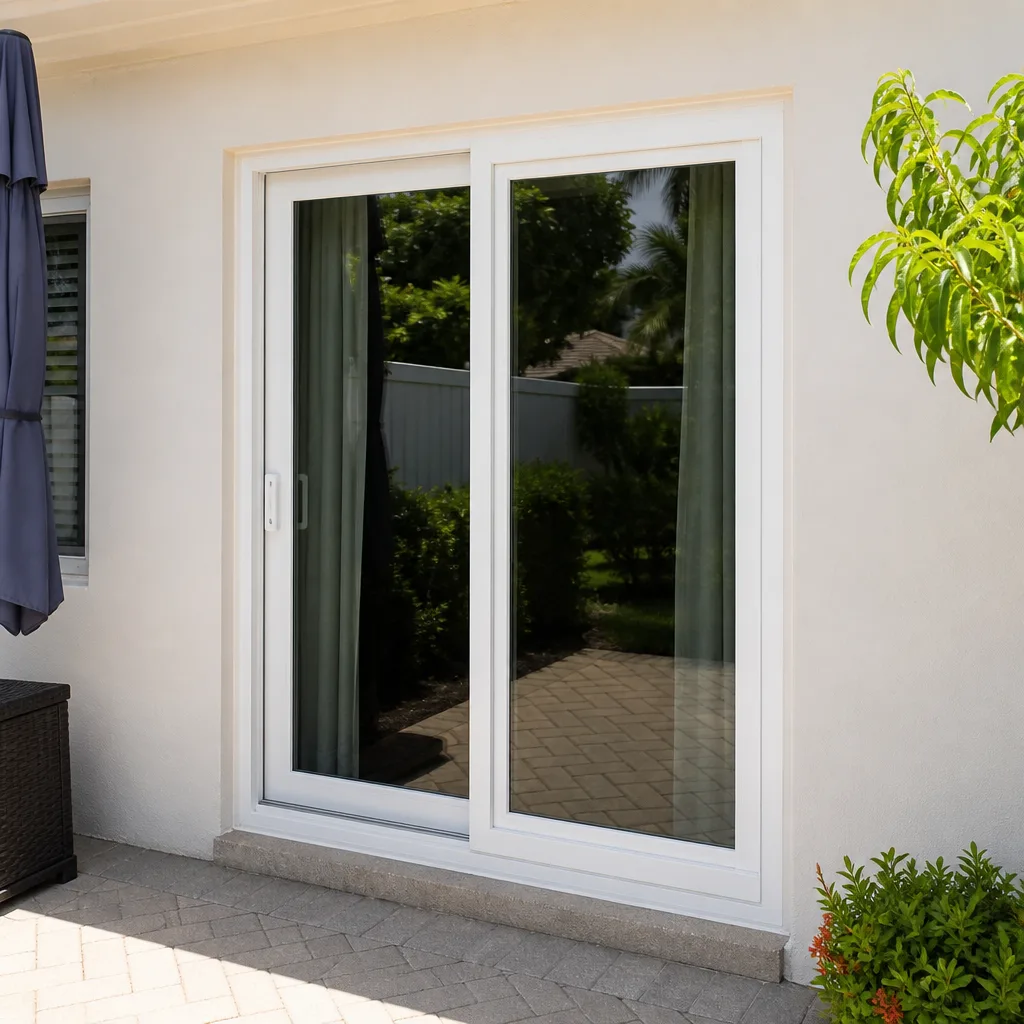 After
After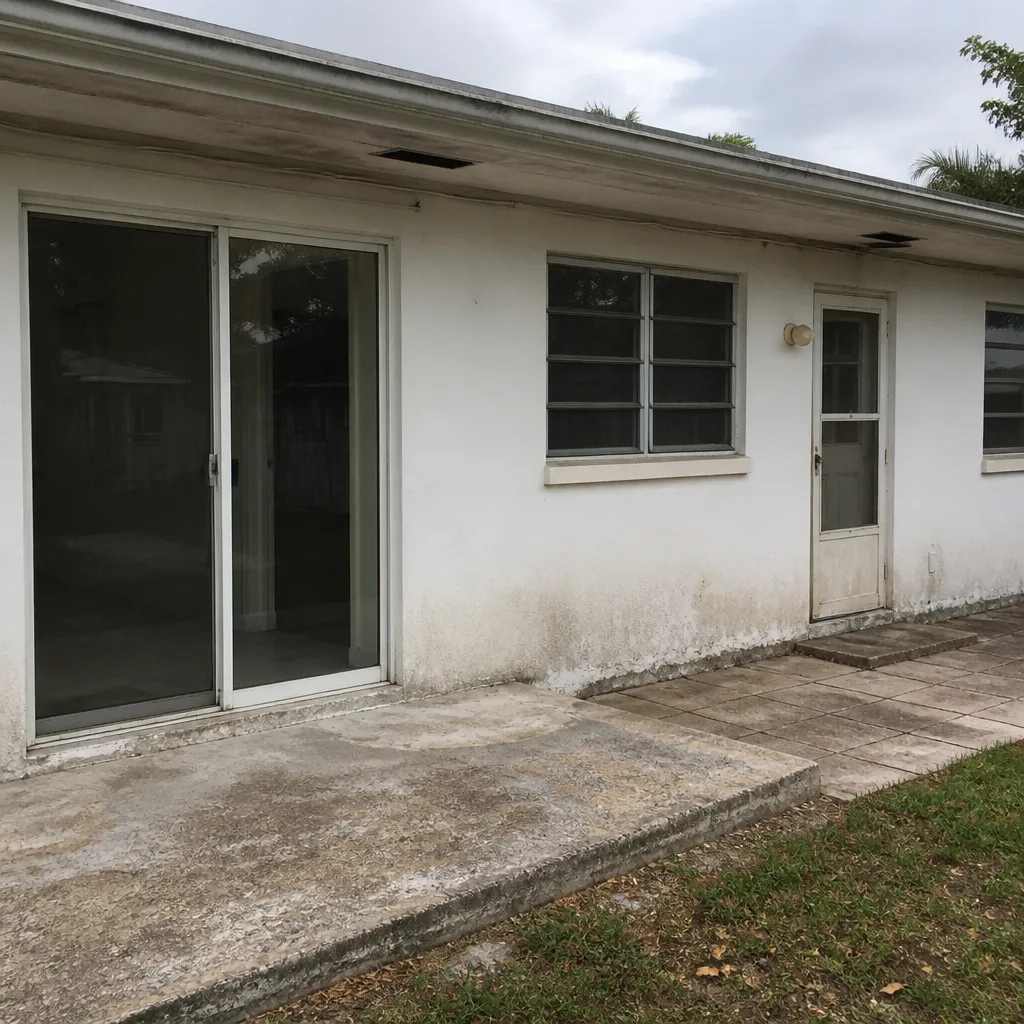 Before
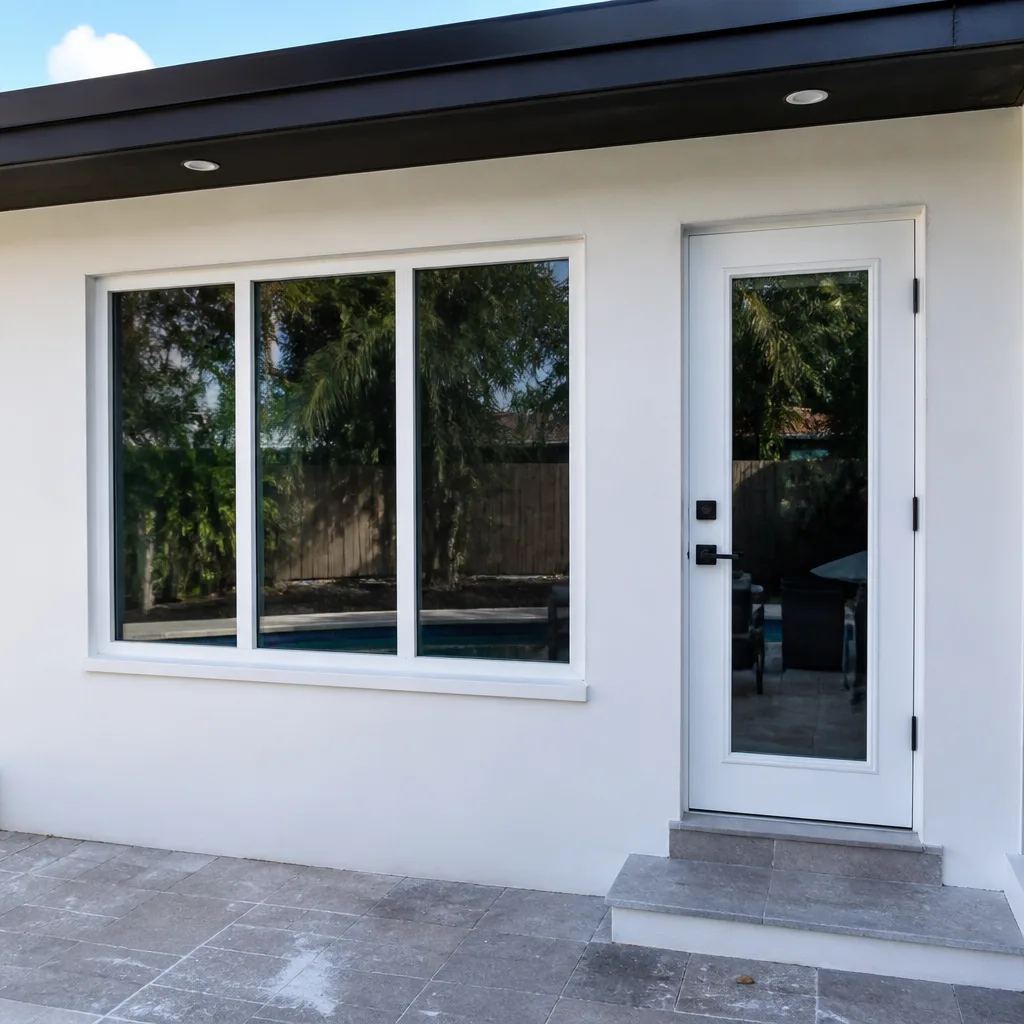 After
After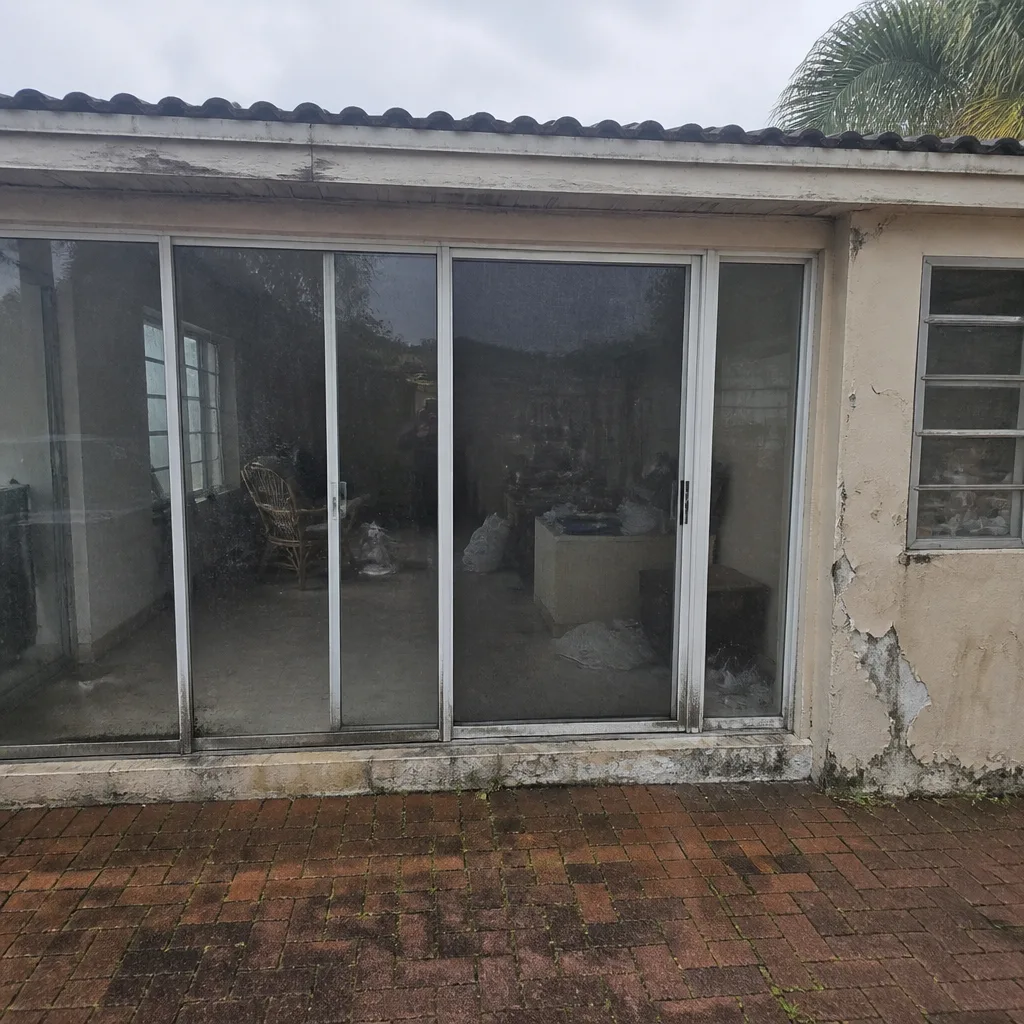 Before
 After
AfterDIY vs Professional Windows & Doors: The Pompano Beach Homeowner’s Decision Guide
Here’s the counterintuitive truth most Pompano Beach homeowners don’t discover until it’s too late: Florida Statute 489 says you can legally act as your own contractor on your own home. But Broward County’s High Velocity Hurricane Zone (HVHZ) code adds installation-method requirements that void impact window certifications if the work isn’t performed by a credentialed installer. So the law says yes, you may. The code says if you do, your hurricane protection rating evaporates. This guide walks through exactly what you can safely tackle yourself, what triggers the licensed-contractor requirement, what a DIY project really costs after permits and potential redos, and why lenders and buyers’ attorneys in South Florida are now scrutinizing window and door work at closing like never before. By the end, you’ll know precisely where the line is between smart weekend savings and an expensive liability.
Quick Answer
In Pompano Beach, a homeowner can legally DIY non-structural tasks like weatherstripping, screen replacement, hardware swaps, and caulking without permits. But full window or door replacement, especially impact-rated units, almost always requires a licensed contractor to pull Broward County permits and install per Miami-Dade NOA specifications – otherwise the impact rating is void, your insurance coverage is at risk, and the unpermitted work surfaces when you sell. The homeowner-as-own-contractor permit path exists but exposes you to inspection failures and liability that most homeowners shouldn’t accept. For anything beyond basic maintenance, hire a licensed local pro.
Table of Contents
- What a Pompano Beach Homeowner Can Legally and Safely DIY
- What Triggers the Licensed-Contractor Requirement
- How DIY Installation Voids a Miami-Dade NOA and Your Impact Rating
- The Homeowner-as-Contractor Permit Pathway: What It Allows and What It Risks
- The True Cost Comparison: Permitted DIY vs Professional Install in Pompano Beach
- Why Lenders and Buyers’ Attorneys Scrutinize Window Work at Closing
- Common Mistakes to Avoid
- When to Call a Professional
- Frequently Asked Questions
- The Bottom Line
What a Pompano Beach Homeowner Can Legally and Safely DIY
Not everything with a window or door requires a permit, a contractor, or a second mortgage. There’s a real list of tasks a Pompano Beach homeowner can do this weekend without talking to anyone at the Broward County Building Department. The line is simple: if you’re not changing the structural opening, altering the frame’s attachment to the building, or touching the impact-rated seal, you’re generally in DIY territory.
Here’s what’s genuinely safe and legal to do yourself:
- Weatherstripping replacement: Peel off the old, press in the new. This is the single highest-ROI DIY task for a South Florida home, because salt air and humidity degrade seals fast. You’ll notice the difference in your AC bill within a month.
- Screen replacement: Torn lanai screens, window screens, even sliding door screens. Spline, roller tool, new mesh – it’s an afternoon job, and materials are cheap at any Pompano Beach hardware store.
- Hardware swaps: Handles, locksets, hinges, and rollers (the sliding door kind you can access from inside without removing the panel). If the screw holes line up, you’re fine.
- Caulking and resealing: Interior and exterior caulk beads around frames. This is maintenance, not installation, and it’s something every coastal homeowner should do annually given how the sun and salt chew through sealant.
- Cleaning tracks and lubrication: Sliding door tracks, window channels, roller assemblies. A can of silicone spray and a vacuum go a long way.
- Window film application: UV-blocking film on existing glass. It doesn’t change the glass’s structural properties, so no permit is needed.
These tasks are safe because they don’t touch the water barrier, the structural attachment, or the impact-rated assembly. They also don’t require a permit. Do them, save money, and enjoy the satisfaction. But the moment you’re pulling nails out of a frame flange, cutting stucco, or lifting a sash out of its rough opening, you’ve crossed the line – and in Pompano Beach, that line is drawn with a lot more force than in, say, Ohio.
What Triggers the Licensed-Contractor Requirement
Broward County sits entirely inside Florida’s High Velocity Hurricane Zone. That designation isn’t bureaucratic trivia – it’s a building code reality that changes what you’re allowed to touch. The HVHZ requires that any replacement window or door that is part of the building’s pressure envelope (which means: nearly all of them) be installed to meet Miami-Dade County Product Control standards. That approval comes with a Notice of Acceptance, called an NOA, and the NOA specifies exact installation methods, fastener types, anchoring patterns, and sealant requirements.
Here’s the trigger list. If any of these are true, you need a licensed contractor:
- Replacing the entire window or door unit: Not the glass, not the screen – the whole frame assembly. This changes the structural opening closure and requires a permit.
- Installing impact-rated windows or doors: PGT, CGI, ES Windows, CWS – all of these manufacturers issue NOAs that specify credentialed installation. A homeowner install voids the NOA.
- Changing the size or shape of the rough opening: Cutting into block, reframing, adding headers – this is structural work, full stop.
- Replacing a door with sidelights or a transom: These assemblies are pressure-rated as a single unit, and the installation method is critical to their performance.
- Any work on a second-story or higher opening: The fall risk alone puts this firmly in professional territory, not to mention the code requirements.
- Replacing a window in a home built after 2002: The Florida Building Code’s stricter wind-load requirements apply, and the permit process will demand documentation a DIYer can’t produce.
The permitting trigger is real: Broward County requires a permit for window and door replacement, period. The only person who can pull that permit without a contractor’s license is the homeowner acting as their own contractor under FS 489.103(7), and that path comes with a wall of requirements we’ll get to next.
How DIY Installation Voids a Miami-Dade NOA and Your Impact Rating
This is the part of the DIY conversation that doesn’t show up in the Home Depot forum threads. When you buy an impact window – let’s say a PGT WinGuard or a CGI Sentinel series – the product itself isn’t hurricane-rated. The system is hurricane-rated. The glass, the frame, the anchoring method, the fastener schedule, the sealant – all of it working together is what earns the Miami-Dade NOA. The NOA document specifies exactly how many screws, what kind, what spacing, what embedment depth, and which sealants are approved for each installation substrate.
When a homeowner installs that window without following the NOA to the letter, here’s what actually happens:
- The NOA is voided: The manufacturer will not stand behind the product’s hurricane performance if the installation wasn’t done by a credentialed installer using the NOA method. If you ever file a warranty claim for storm damage, the first question is “who installed it?”
- The impact rating is gone: Your home’s hurricane protection rating – the thing that gets you a wind mitigation discount on your insurance policy – depends on documented, NOA-compliant installation. A DIY install can’t be documented. The discount disappears.
- Your insurance company can deny a claim: If a storm blows out a DIY-installed impact window and the damage extends into your home, the insurer can point to the unpermitted, uncertified work and deny the entire claim, not just the window.
- The code official won’t sign off: When the Broward County inspector comes out – and they will come out, because the permit will require an inspection – they check the anchoring against the NOA. A homeowner who guessed on fastener spacing will fail that inspection and have to start over.
We see this scenario regularly. A homeowner spends $4,000 on impact windows, installs them over a long weekend, pats themselves on the back. Two years later a Category 2 rolls through, the window fails at the frame, and the insurance adjuster asks for the installation documentation. That’s the moment the whole project’s economics reverse. The money saved on labor becomes the money lost on an uncovered claim. If you’re considering Impact Windows in Pompano Beach, protect the investment with credentialed installation from day one.
The Homeowner-as-Contractor Permit Pathway: What It Allows and What It Risks
Florida Statute 489.103(7) is the “homeowner exemption.” It says a homeowner can act as their own contractor on their own residence without holding a contractor’s license. On paper, that means you can pull a Broward County permit for your own window replacement, do the work yourself, and have it inspected. In practice, the pathway is narrower than most people assume, and the liability exposure is wider.
Here’s what the homeowner-as-contractor permit actually involves in Pompano Beach:
- Permit application: You file as owner-builder. Broward County will require you to sign an affidavit acknowledging that you are the owner, the work is on your primary residence, you’re not selling the home within a year of completion, and you’re personally responsible for compliance with all code requirements.
- Documentation: The permit office will ask for the NOA for the exact window product you’re installing. You’ll need to actually read it and build your installation plan around it. The NOA for a PGT or CGI window runs dozens of pages and includes engineering drawings.
- Inspections: You’ll schedule and pass a rough inspection (anchoring before trim covers it) and a final inspection. If you fail either, you pay for a re-inspection and fix the problem. If you fail twice, the building official can revoke the permit and require a licensed contractor to finish the job.
- Liability transfer: When you sign as owner-builder, you are the contractor of record. If a window fails and someone is injured, you carry the liability personally. If the work fails a storm, you’re on your own – no contractor’s warranty, no installer’s insurance to claim against.
The practical problems compound fast. The NOA specifies fastener types (often specific brands and sizes like Tapcon 1/4-inch by 3-1/4-inch with a particular embedment depth). It specifies sealant types (often 3M or Tremco products). It specifies how many fasteners per side, how far from the corners, and whether the opening requires additional structural strapping. A homeowner who hasn’t installed fifteen of these doesn’t know what they don’t know – and the inspector will find it.
Then there’s the timeline problem. Your insurance likely requires documented, permitted, NOA-compliant replacement of any damaged window. An owner-builder permit that’s still open or failed creates an insurance gap precisely when you need coverage most.
The True Cost Comparison: Permitted DIY vs Professional Install in Pompano Beach
Everyone loves a good “DIY saves you 50%” story. Here’s the math for a typical Pompano Beach home – let’s use a 1,900 square foot ranch with 12 windows, half of them impact-rated replacements, half standard. This is what the numbers actually look like in 2026, not a national average from a home improvement blog.
Permitted DIY Window Replacement: The Real Numbers
- Materials (12 windows, mix of impact and standard): $6,800 to $10,400 depending on brand and size. A PGT WinGuard single-hung runs $450 to $700; a CGI Sentinel runs $600 to $950. Source locally in Pompano Beach, and these are the window-only prices you’ll see.
- Permit fee (Broward County owner-builder): $180 to $350 for a window package, depending on valuation.
- Tools: Shim bars, levels, impact driver, hammer drill (you’ll need one for concrete block), caulk guns, sealant, foam backer rod, and a laser level. If you own none of this: $500 to $900. If you own some: $150 to $300 for the specific items.
- Disposal: You can’t put old windows in the regular trash. A small dumpster rental or a couple of trips to the Broward County transfer station: $120 to $300.
- Fasteners and sealants per NOA spec: $80 to $150. You will need the exact screws and sealants the NOA calls for, and you’ll pay retail for them.
- Your time: A first-time DIYer installing 12 windows will spend 40 to 60 hours. That’s two to three full weekends. At any reasonable hourly value, it’s $1,000 to $2,500 of your own labor.
- Potential re-do: If you fail the rough inspection for anchoring, you’ll be pulling trim, re-anchoring, and paying for a re-inspection. Budget $200 to $800 for this possibility.
Total all-in for a successful permitted DIY job: roughly $8,400 to $12,900 in hard costs and 40 to 60 hours of your time. That’s if everything goes right the first time.
Professional Installation in Pompano Beach
- Materials (same 12 windows, mixed impact and standard): $6,500 to $9,800. Contractors pay less for the same windows than retail customers, which often offsets some of the labor cost.
- Labor including haul-away, flashing, anchoring, sealing, and trim: $2,800 to $4,500 for a 12-window package in the current Pompano Beach market.
- Permit and inspections: $180 to $350, same as above, but the contractor handles the scheduling and the paperwork.
- Warranty coverage: Included. The manufacturer’s warranty stays valid because installation is credentialed, and the installer’s workmanship warranty covers installation defects.
Total all-in for professional installation: $9,500 to $14,500, zero of your weekend hours, plus warranties that actually mean something.
Read that again. The DIY savings on a 12-window project is maybe $1,100 to $2,600 – and you’re trading away the NOA compliance documentation, the manufacturer warranty, the installer’s liability coverage, and two to three weekends of your life. We regularly see homeowners in Pompano Beach realize this math only after they’ve already paid for the windows. If you’re weighing Window Replacement in Pompano Beach, don’t skip the full cost picture before you commit.
Why Lenders and Buyers’ Attorneys Scrutinize Window Work at Closing
Five years ago, nobody at a Pompano Beach closing asked about window permits. Today it’s a standard question, and the reason is simple: the insurance market in Florida has changed. Insurers are bleeding money from hurricane claims, and they’ve started asking for documentation on every part of the building envelope. If the windows were replaced without permits, the buyer’s insurer may refuse to write a policy or may write one with a significant wind mitigation penalty. That kills deals.
Here’s what buyers’ attorneys now look for in South Florida:
- Open or expired permits: If Broward County records show a window permit that was pulled but never closed, or a permit that lists work different from what’s on the home, that’s a title defect that must be resolved before closing.
- Unpermitted window work visible from the street: If the windows look newer than the permitted construction, a sharp inspector will flag it, and the buyer’s attorney will ask for documentation.
- Wind mitigation inspection inconsistencies: A wind mitigation report that says “impact windows installed” but has no permit number or NOA reference is a red flag. The buyer’s insurer will reject it.
- Seller disclosures: Florida law requires sellers to disclose known defects, and a window that was installed incorrectly, with a voided NOA, is a known defect. Failure to disclose creates legal exposure for the seller.
When a professional installs your windows, the paper trail is automatic: the permit number, the closed inspection report, the NOA reference for each window model, the wind mitigation documentation, and a transferable workmanship warranty. That documentation has real value at closing – often $5,000 to $10,000 in negotiation leverage, because the buyer can’t get insured without it. A DIY install produces none of that paper. The “savings” from doing it yourself becomes a closing cost you’ll pay later, with interest. That’s why Window Installation in Pompano Beach done by a licensed contractor is, in the long run, the cheaper option.
Common Mistakes to Avoid
- Treating DIY window replacement like a northern-state project: In most of the country, window replacement is a cosmetic upgrade. In Pompano Beach, it’s a structural and insurance-critical modification. The code reality is different and the consequences are different.
- Skipping the permit entirely: Some homeowners install windows without any permit, reasoning that “nobody will know.” Broward County’s aerial property records, the buyer’s inspector, and the wind mitigation auditor will all find it eventually.
- Buying windows online without verifying NOA availability: A window that’s sold without a valid Miami-Dade NOA cannot be legally installed in Pompano Beach. That bargain window becomes an expensive paperweight.
- Assuming the impact rating is in the glass only: The anchor pattern, fastener type, and sealant are what carry the rating. DIY installs almost always fail on anchoring.
- Filing as owner-builder when you’re not planning to live in the home long-term: The owner-builder affidavit requires you to live in the home and not sell within a year. Filing falsely is a criminal violation.
- Underestimating the tool requirement for concrete block: Pompano Beach homes are mostly CBS construction. Anchoring into block requires a hammer drill and the right bit. Standard drills and wood screws will fail inspection.
- Ignoring the windborne debris region map: All of Broward County is in the windborne debris region. That means every window in every exterior wall is required to be impact-rated or protected. There is no “side of the house” exemption.
When to Call a Professional
If you’re replacing entire window units, installing impact-rated glass, changing rough openings, replacing doors with sidelights, working on a second story, or dealing with any opening that shows signs of water intrusion or termite damage – call a professional. If you don’t have a copy of the NOA and the ability to follow its anchoring specs exactly, call a professional. If your insurance company is asking for wind mitigation documentation, call a professional. The line between smart DIY and expensive liability is frankly clear, and it falls much closer to “basic maintenance” than most homeowners assume. Winslow Windows & Doors home has been serving Pompano Beach since 2011, and we offer free estimates for exactly this kind of work. Call (904) 893-3309 and we’ll give you a straight answer on whether your project is a DIY candidate or a professional job.
Frequently Asked Questions
You can legally act as your own contractor under Florida Statute 489.103(7), but Broward County’s HVHZ code requires that all impact window installations follow Miami-Dade NOA specifications, which in practice requires credentialed installation. A homeowner who installs impact windows themselves voids the NOA, loses the hurricane protection rating, and creates an insurance and resale liability. For practical purposes, full window replacement in Pompano Beach should be done by a licensed contractor.
A full 12-window professional installation in Pompano Beach typically runs $9,500 to $14,500 all-in including materials, labor, permit, and haul-away. A permitted DIY install of the same scope runs $8,400 to $12,900 in hard costs plus 40 to 60 hours of your time, and you lose the manufacturer warranty and NOA documentation. The savings rarely justifies the sacrifice. Call (904) 893-3309 for an exact quote on your specific windows.
It can. Insurance companies offering wind mitigation discounts require documented, permitted, NOA-compliant installation. A DIY install can’t produce that documentation, so the discount disappears. If a storm causes damage through a DIY-installed window, the insurer can deny the claim on the grounds of unpermitted work. Professional installation protects your coverage.
Weatherstripping, screen replacement, hardware swaps, caulking, track cleaning and lubrication, and window film application are all DIY-friendly, permit-free tasks. These don’t change the structural opening or alter the impact-rated assembly. Anything involving frame removal, anchoring, or glass replacement crosses into permitted territory.
A Notice of Acceptance is a Miami-Dade County document that approves a specific window product and its exact installation method for use in the HVHZ. The NOA specifies fastener types, anchor patterns, and sealants. Installation that deviates from the NOA voids the product’s hurricane rating and the manufacturer’s warranty. Professional installers work from the NOA on every job.
Yes. Sliding glass doors are part of the pressure envelope and require a Broward County permit for replacement, especially impact-rated units. The same NOA and anchoring requirements apply as with windows. Unpermitted sliding door replacement creates the same insurance and resale problems as unpermitted window work. For a free estimate on sliding door replacement, call (904) 893-3309.
The Bottom Line
In most of the country, a capable DIYer can swap a window over a weekend and never think about it again. In Pompano Beach, that same project lives inside a specific legal and financial framework: the HVHZ code, the Miami-Dade NOA system, the Broward County permit process, and a South Florida insurance market that now demands documentation at every turn. The DIY tasks worth doing are clear: weatherstripping, screens, hardware, caulking. The tasks that should go to a licensed professional are equally clear: nearly everything else involving the building envelope. The savings from a DIY window replacement in Pompano Beach are real but small – and the long-term costs of voided warranties, denied claims, and poisoned closings are large. Do the small stuff yourself-our Seasonal Windows & Doors Care for Pompano Beach: Year-Round Homeowner’s Guide shows you how. Call a pro for the rest. That’s the decision guide in three sentences.
Written by Ed Winslow, Owner at Winslow Windows & Doors, serving Pompano Beach since 2011. Explore more guides & resources on windows and doors.
Six Reasons Homeowners Choose Winslow Windows & Doors
Impact systems engineered to design pressures up to +/-100, matched to your wind zone - your openings hold when the storm arrives.
Low-E insulated impact glass from our manufacturer lines commonly cuts monthly cooling bills 20-30%.
Laminated impact glass shuts out up to 40% of outside noise - traffic, neighbors, weather.
Monitoring services run $30-90 a month. Laminated impact glass resists forced entry around the clock, with no subscription.
Florida homeowners average around 25% savings on the windstorm portion of their policy after protecting every opening - some homes qualify for more.
A full impact package upgrades curb appeal, buyer confidence and appraised value in one project.